
A Family Story of Bread, Courage, and Tradition
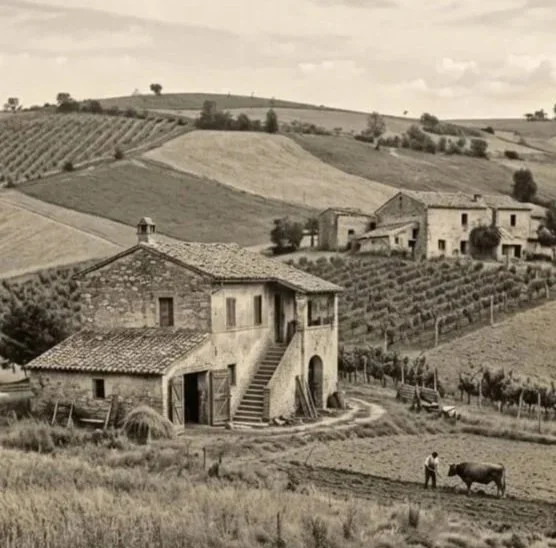
This is the story of my grandfather, Rolando. It is a story of sacrifice, courage, hard work, and passion. A story that, even today, I feel deeply connected to. When I think of Grandpa Rolando, I can almost smell freshly baked bread. He was born in Offagna, in the Marche region of Italy, in a farmhouse in the countryside where he lived with his parents and eight siblings. It was a simple life, closely connected to the land and the animals. People worked hard every day, and from an early age, they learned how important family, sacrifice, and the ability to face hardship were.
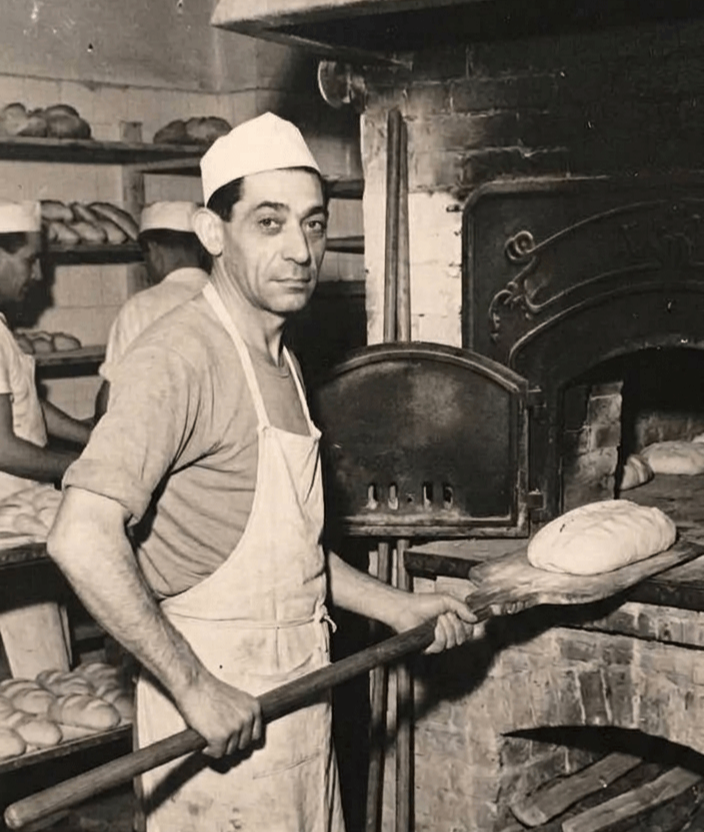
Rolando grew up in that environment, learning never to give up and always to find a way forward, even when life seemed to offer no way out. He could have chosen a secure job with the railways, but his heart was leading him somewhere else. He chose the trade of a baker, a demanding profession that required discipline and dedication. He would wake up at two in the morning and return home around noon. Bread was not simply his job. It would become the thread running through his entire life.
The War: Fear, Courage, and Solidarity
Then the war came, bringing with it a period that would deeply affect the lives of the entire family.
The countryside, which until then had been a place of work and everyday life, became a place of fear and danger. I remember the stories from those years, when neither people nor animals were safe, even in places that seemed most protected. A goose, for example, was killed by a fragment from a bomb. It may seem like a small event today, but in those years, it represented yet another loss in a life already filled with hardship and deprivation.
My family also tried to protect those whose lives were in danger. My great-grandparents hid a partisan among the hay bales, hoping to keep him safe from German soldiers. But the Germans suspected that people might be hiding in the haylofts and would drive pitchforks into the hay to search for them.
A sound, a movement, or even the slightest suspicion was enough to put everyone in danger. Whoever was hiding had to remain completely still and silent, even when the pitchforks reached them and caused injuries. They could not cry out or give themselves away. Silence was their only chance of survival.
The situation became even worse when the Germans, as retaliation, took the family's animals: chickens, rabbits, pigs, and everything else that represented an essential resource for survival. They also took the family's milk, once again leaving them in a desperate situation. In the countryside, those animals were not simply livestock. They were food, labor, and security for the future.
As if that were not enough, the younger brothers were also at risk of being forced into military service. That was when the women of the village showed extraordinary courage. Armed with sickles and pitchforks, they stood up to the Germans, determined to protect those young men and prevent them from being taken away. It was an act of solidarity and courage that remained in our family's memory.
Those were times when people helped one another because they knew that without the help of others, surviving would have been even harder.
Rolando at the Front and His Captivity in Russia
Rolando was also sent to the front. But fate had a different path in store for him than anyone could have imagined.
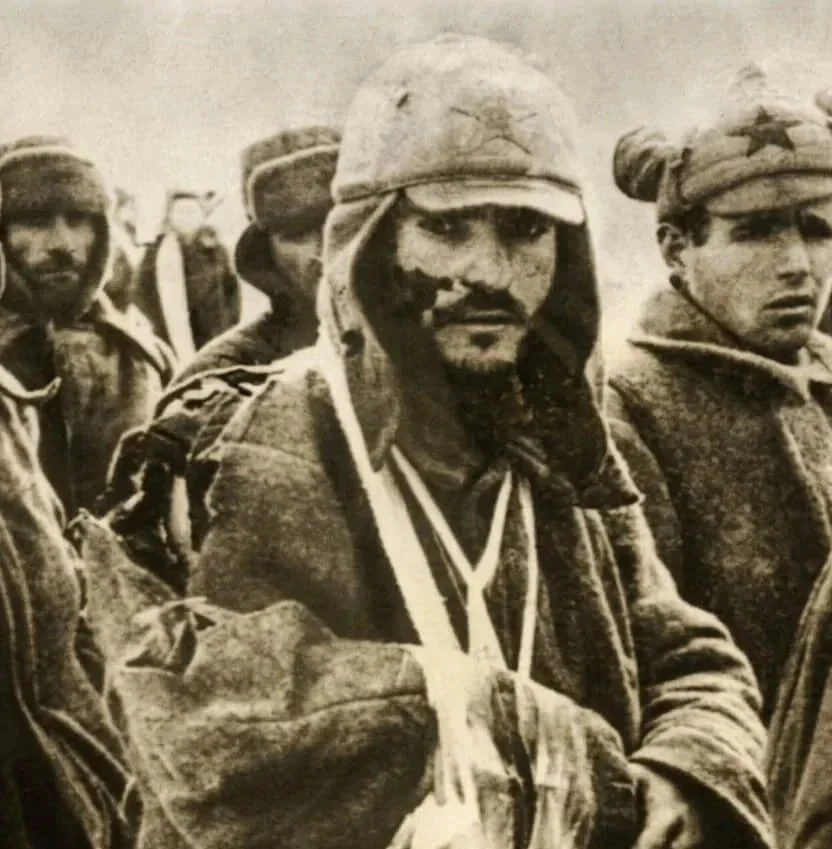
Because of a mistake during a train journey, he ended up in territory controlled by the Russians and was taken prisoner. What followed was almost three years of captivity, far from home, his family, and everything he knew.
Hunger was a constant presence. Even under those conditions, however, his trade became a valuable resource. He knew how to make bread and did whatever he could to survive, using potato peels, scraps, and anything else he could find that might provide something to eat.
During those extreme moments, when hope seemed almost completely out of reach, Rolando told us that he experienced an apparition of the Virgin Mary. According to his story, she told him to endure, not to give up, and that he would make it home.
That vision became a light for him during his darkest moments. He held on to that hope and continued to fight, day after day. After almost three years, he finally made it back to Italy. His return was an immense joy for his family and for the entire neighborhood, who welcomed him home with a great celebration. He had returned after enduring experiences that could have broken anyone.
Starting Over: Bread as a Way Forward
Coming home did not mean that all the difficulties were over. The war had left behind poverty, loss, and families forced to rebuild their lives almost from nothing.
Rolando's family once again found themselves in a difficult situation. The animals had been taken away, resources were scarce, and they had to find a way to move forward.
Once again, Rolando's trade made the difference.
The bread he had learned to make as a young man became a tangible way to rebuild his family's life. His work allowed him to earn a living and help restore stability to those he loved.
His story has always made me think about how a skill, a passion, or a trade can become much more than a job. It can become a way forward, even a means of survival.
From Ancona, Antica Arte Bianca, and a Passion for Pizza
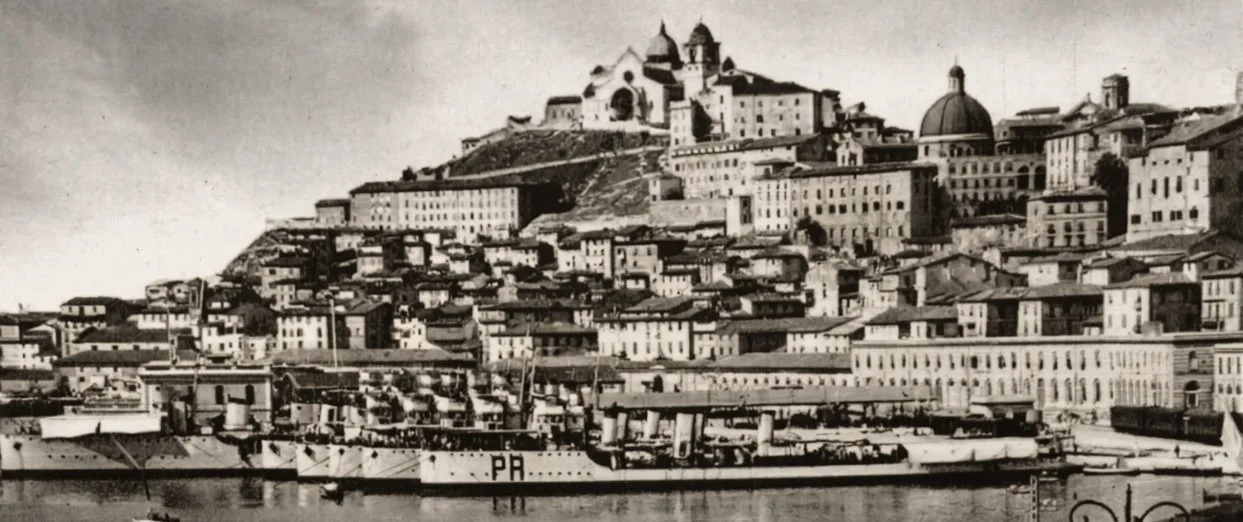
After returning to everyday life, Rolando went back to working as a baker. He was given an important opportunity at Antica Arte Bianca in Ancona, where he was able to further develop his skills in breadmaking and pizza preparation.
He was a curious man who was always eager to learn and experiment. He did not simply repeat what he had been taught. He was constantly looking for ways to improve, try new combinations, and create something of his own.
He also continued the tradition of making Neapolitan pizza dough, a recipe connected to his uncles, who were pizzaioli living in Naples, where part of the family resided. That recipe became an important part of his professional identity. But Rolando was not simply a keeper of tradition. He was also a creative man. He invented original recipes, experimented, and put something of himself into everything he made.
His passion went beyond simply producing bread and pizza for a living. To him, his craft was an art to be practiced and cultivated every day.
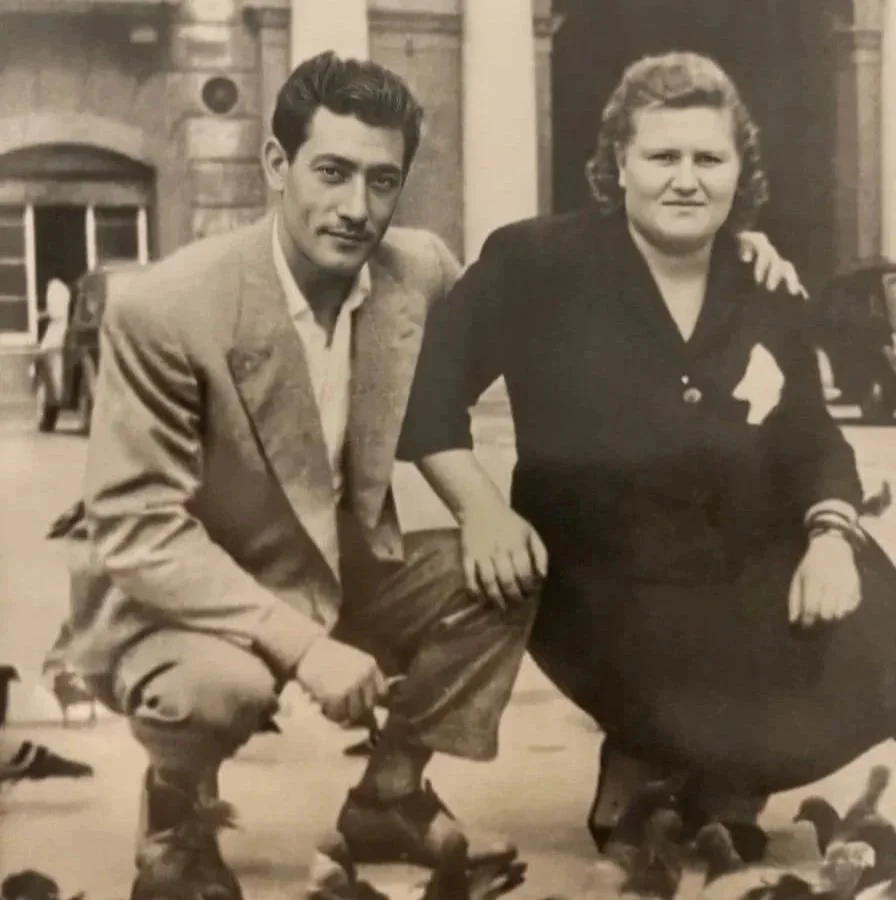
Ida, Family, and a Lifetime of Work
There was also Ida, his wife, with whom he built his family.
They had two daughters, born in 1953 and 1958. During those years, Rolando continued to work with tremendous dedication, devoting much of his life to the bakery.
His professional career lasted a total of forty-six years. They were years of waking up in the middle of the night, long and demanding days, carefully prepared dough, and a deep sense of responsibility toward his family.
Over time, he was able to enjoy a few special moments as well. Among the memories from those years are his Vespa and a lottery win, small but meaningful moments of happiness in a life built primarily on hard work and sacrifice.
His experience and dedication helped provide stability for his family and gave his daughters a lasting example: that of a person who never gives up and always tries to build something with his own hands.
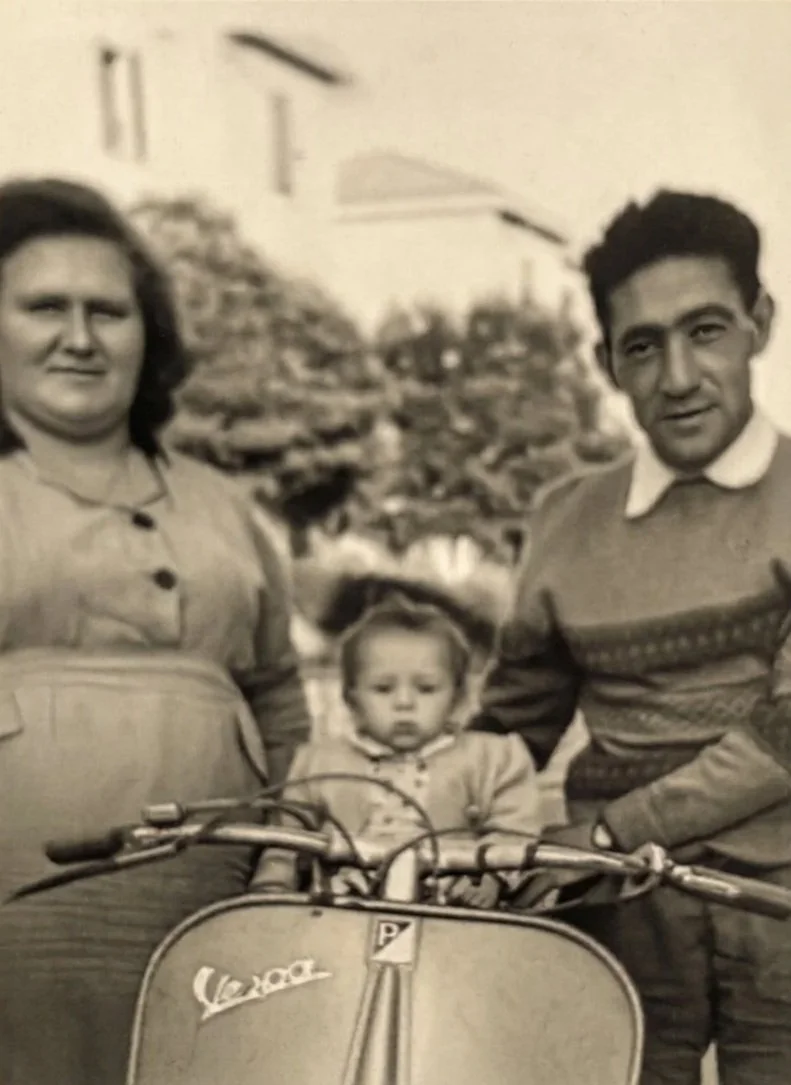
Patrizia: A Passion That Lives On
His second daughter, Patrizia, my mother, carried on that legacy in a very special way. She, too, developed a deep passion for cooking and became a chef. She used her skills to help others, cooking in Ancona for elderly people and those in need.
In her, I saw the same spirit that had defined my grandfather. Cooking was not simply a profession. It was also a way of caring for people. A love of food, knowledge of ingredients, and the importance of doing things well were passed from one generation to the next.
My Birth and What I Was Given
I was born in 1981 and I was fortunate to grow up surrounded by people who had made cooking and baking an essential part of their lives. My grandfather Rolando and my mother Patrizia found the time and the desire to pass their knowledge, experiences, and above all, their passion for bread and pizza on to me.
I did not receive only recipes. I received a story, a way of working, and a culture built on care, attention, and respect for tradition. From my grandfather, I learned the importance of patience, consistency, and never losing the desire to experiment.
From my mother, I inherited a love of cooking and the desire to share what I create with others. Ida, my grandmother, passed away in 1992. Rolando left us in 1998. But their memory has remained alive, along with everything they built and passed down to us.
From Ancona to Los Angeles: A Tradition That Continues
Today, I try to carry that legacy forward in the United States, especially here in Los Angeles, through my work and my passion for Italian pizza.
Every time I prepare a dough, I feel that I am continuing something that began long before me. It is not simply a recipe being passed from one generation to the next. It is a connection to my roots, to Offagna, to Ancona, and to all the people who helped shape this story.
I often think about my grandfather, his childhood in the countryside, the war, his captivity, the hunger, and the struggle to start over. I think about how he managed to turn his trade into a way forward for himself and his family.
The most beautiful part is that his passion did not end with him. It passed to my mother and then to me, traveling across time and even across the ocean.
Today, when I make a pizza, I like to think that a little of my grandfather's hands are still there, beside mine.
This is the story I carry with me. A story of family, bread, sacrifice, and a love of cooking. Because sometimes, what is born from the greatest hardships becomes exactly what allows us to keep moving forward and leave something behind for those who come after us.